Introduction
You're mid-project when the fastener bin runs dry. Or your safety cabinet is out of nitrile gloves on the one day OSHA decides to walk through. Every shop owner knows this scramble.
Flip the scenario: shelves stacked with abrasives nobody's tracking, cash tied up in stock that's just sitting there. Both problems come from the same root cause — reactive inventory management.
Supplier Managed Inventory (SMI) reverses that model. Instead of your team tracking stock and placing every order, your supplier monitors usage and replenishes before you run out.
This article breaks down how SMI works, weighs the pros and cons, and shows how a partner like Buster's Industrial Supply builds a program around how your shop actually operates.
Key Takeaways
- SMI shifts day-to-day monitoring and replenishment to your supplier, using shared usage data and agreed stock thresholds
- Fewer stockouts, less manual ordering, and better cash flow from right-sized inventory
- Less daily control and heavier reliance on your supplier's reliability
- Success depends on picking a responsive supplier who knows your operation
What Is Supplier Managed Inventory?
Supplier Managed Inventory and Vendor Managed Inventory (VMI) mean the same thing. SAP uses the terms interchangeably in its documentation: SMI or VMI describes the same replenishment process.
The label tends to shift based on industry context, not a fixed rulebook.
The core mechanic is simple: your supplier tracks stock levels at your location (or through shared data) and restocks based on minimum and maximum thresholds you agree on together. No purchase order needed every time you're running low.
Two Ownership Models
Not all SMI programs work the same way financially:
- Standard SMI: You own the stock the moment it's delivered, same as a regular purchase
- Consignment SMI: The supplier retains ownership until you actually use the item, delaying payment until consumption
This distinction matters for cash flow. Consignment models keep more capital in your pocket longer, though suppliers sometimes build that flexibility into pricing.
The Traditional Model vs. SMI
In a traditional setup, you notice you're low, you count what's left, you place an order, and you wait. Every step depends on someone remembering to act. SMI removes that dependency. The supplier is already watching and planning the next delivery.
A real-world example: A fabrication shop's bin of cutting wheels and cobalt drill bits gets checked during a routine site visit. Usage has ticked up because of a new project. Instead of the shop calling in an emergency order, the supplier already adjusted the restock quantity based on what they saw on the shelf.
How Does the Supplier Managed Inventory Process Work?
The mechanics are consistent whether you're running enterprise software or a handshake relationship with a local supplier.
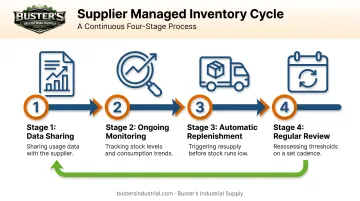
- Data sharing: You provide usage history, consumption patterns, and agreed par levels.
- Ongoing monitoring: Your supplier tracks stock through site visits, smart bins, or shared software, comparing current levels to your agreed thresholds.
- Automatic replenishment: Once stock hits the minimum, the supplier plans and delivers a restock without you submitting a new order.
- Regular review: You and your supplier revisit par levels together to account for seasonal shifts, new projects, or a changing product mix.
Enterprise vs. Small Shop Execution
Large enterprises often run this process through EDI systems or dedicated software platforms that exchange data automatically between ERP systems. SAP's own supply chain modules handle this automated exchange.
Small and mid-sized shops don't need any of that. A dedicated sales rep who visits regularly, checks bins, and knows your operation firsthand can run an equally effective program, often with faster response times than a software ticket queue.
Pros and Cons of Supplier Managed Inventory
SMI isn't a magic fix, but the trade-offs are worth understanding before you commit.
Benefits of SMI for Industrial Businesses
- Fewer stockouts and delays — replenishment happens proactively, not after someone notices the shelf is bare
- Time back for your team — no more hours spent counting stock or filling out reorder forms
- Better cash flow — you avoid both overstocking dead capital and paying rush-order premiums
One Cal Poly case study found employees at an electrical contractor saved 5 to 10 hours per week after implementing VMI, with shortages "virtually eliminated."
That's one company's experience, not a universal benchmark. Still, it matches what most shops see once manual counting leaves someone's weekly routine.
Potential Drawbacks to Weigh
- Less day-to-day control — you give up some say over exactly what gets ordered and when
- Dependency risk — a slow, inconsistent, or unresponsive supplier can leave you exposed
- Unclear terms can bite later — lock down contract length, minimum spend, and exit conditions before you sign
None of these are dealbreakers. They're just reasons to pick your supplier carefully and ask the right questions upfront.
Is Supplier Managed Inventory Right for Your Business?
SMI works best for steady, recurring consumption: think fasteners, safety supplies, lubricants, abrasives, and cutting tools. Items you use every week, not once a quarter.
Industry guidance backs this up: medium-to-high-volume parts that eat up significant ordering and procurement time are the strongest candidates for a managed program. Sporadic, unpredictable usage doesn't fit as well.
Signs it's worth exploring:
- Your staff spend hours each week counting stock or placing routine reorders
- Your shop regularly runs short on consumables mid-job
- You're carrying overstock on shelves nobody's actively tracking
Questions to Ask Before Starting
Vet any program with these questions:
- How responsive is the supplier when something runs low unexpectedly?
- How is usage data shared (site visits, software, or another method)?
- What are the contract terms, including minimum spend and exit conditions?
- Who owns the stock before it's used — you or the supplier?
- How often will par levels get reviewed and adjusted?
Partnering with Buster's Industrial Supply for Smarter Inventory Management
Buster's Industrial Supply runs managed inventory with hands-on, personal service built for small and mid-sized shops.
Jeff and Buster conduct regular site visits, check bins firsthand, and restock based on real familiarity with each customer's operation. They don't rely on a rigid software algorithm guessing at your needs. Customer reviews consistently mention Jeff refilling and stocking supplies across multiple shop locations.
For qualified accounts spending $500 or more per month in the DFW area, this includes:
- Free on-site stocking and supply room organization
- Automatic replenishment before stockouts happen
- Monthly usage reports at no additional cost
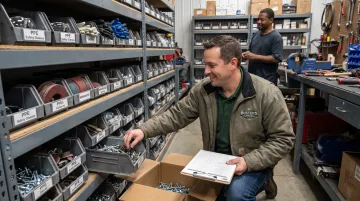
Smaller shops get the upside without the overhead: no software investment and no complicated integration project. You work with a dedicated point of contact who knows your day-to-day needs and can flex when something urgent comes up.
Ready to stop counting bins yourself? Reach out to the Buster's Industrial Supply team to talk through a managed inventory setup built around how your shop actually runs.
Frequently Asked Questions
Can you give me an example of vendor managed inventory?
A shop's bin of fasteners or safety gloves gets monitored by a supplier rep during routine visits. When usage patterns show the bin running low, the supplier restocks it automatically, with no manual order required.
What is the VMI process?
The core cycle involves four steps:
- Share usage data with the supplier
- Monitor stock against agreed thresholds
- Replenish automatically once stock hits the minimum
- Review periodically and adjust par levels
What is SMI in SAP?
SAP offers supplier and vendor managed inventory functionality within its supply chain modules, automating data exchange and replenishment between buyers and suppliers. This is primarily used by larger enterprises with integrated ERP systems.
Is supplier managed inventory the same as vendor managed inventory?
Yes. Industry sources, including SAP, use the terms interchangeably to describe the same supplier-led replenishment process. There's no formal rule separating "supplier" from "vendor" by industry.
What types of industrial products work best with a managed inventory program?
Routine, high-turnover consumables are ideal candidates: fasteners, PPE, abrasives, cutting tools, lubricants, and general shop supplies. Sporadic or one-off items don't fit as well.
How do I get started with a supplier managed inventory program?
Talk through your usage patterns and stocking needs with a trusted supplier like Buster's Industrial Supply. They can help design a program tailored to your shop's actual consumption, not a generic template.