That buildup does more than look bad. It hides leaks, traps heat against belts and hoses, and turns routine inspections into guesswork. Many shops reach for whatever's under the sink — a household cleaner or an all-purpose spray — simply because it's on hand. That's a costly mistake. The wrong chemistry can eat through rubber seals, short out wiring, or void an OEM warranty outright.
This guide breaks down the real differences between degreaser types, how to pick the right one for your equipment, the correct step-by-step cleaning process, and the safety and compliance rules industrial operations can't afford to skip.
Key Takeaways
- Solvent, citrus, foaming, and caustic degreasers each suit different soil levels and equipment materials
- Product choice depends on material compatibility and application method, not just raw cleaning power
- Cooling the engine and covering electrical components before cleaning prevents avoidable damage
- SDS access, proper PPE, and compliant wastewater disposal are non-negotiable in industrial settings
- Bulk purchasing through an experienced supplier keeps compliant degreasers on hand without overordering
Why Engine Degreasing Matters for Industrial Operations
Grease and grime aren't just cosmetic problems on industrial equipment. Buildup traps heat against belts, hoses, and pulleys, accelerating wear that otherwise wouldn't show up for months.
It also masks early warning signs of trouble — a hairline oil leak or a cracked hose looks identical to normal grime until someone gets a clean look underneath.
That's the real value of routine degreasing: it turns your engine into something you can actually inspect.
- Leaks get caught early, before they become blown gaskets or seized components
- Overheating risk drops when belts and pulleys aren't insulated by caked-on oil
- Wiring and sensors stay visible instead of buried under grime that can hide corrosion
- Resale and trade-in value hold up better when engine bays are clean at inspection time
Preventive maintenance pays off at scale, too. A 2021 McKinsey analysis of digitized maintenance programs found an average 20% reduction in downtime among manufacturers that combined systematic inspection with proactive upkeep.
Degreasing alone won't produce that number, but it's the visibility step that makes accurate inspection possible in the first place.
For shops running fleet vehicles, forklifts, or production-line equipment, that translates into fewer surprise breakdowns and safer walk-around inspections.
Types of Engine Cleaners and Degreasers
Degreasers vary by chemical base, strength, and the surfaces they're built for. Picking the wrong type wastes money and can damage parts. The wrong formula can corrode aluminum housings, cloud plastic covers, or leave a residue that attracts more dirt.
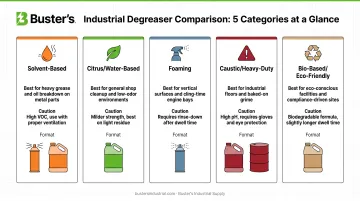
Solvent-Based Degreasers
Solvent-based formulas use petroleum distillates or other non-aqueous solvents to dissolve heavy oil and grease fast. They're the go-to for extremely soiled engines with years of caked-on buildup that water-based products struggle to touch. Most are high-VOC, several have low flash points, and ventilation plus PPE aren't optional.
Buster's stocks Zenex ZenaFast, a 20-ounce, non-chlorinated aerosol that evaporates fast and leaves no residue, priced around $6.70 a can. For rotating components specifically, Brake Clean NC (12-pack of 12-ounce cans, $63.65 per case) handles instant degreasing without chlorinated solvents.
Water-Based and Citrus Degreasers
Citrus/terpene degreasers like d-limonene aren't automatically "water-based" chemically, but many are blended with surfactants so they mix with water and rinse cleanly. They suit routine maintenance where shops want lower odor and fewer VOCs without sacrificing everyday cleaning power.
Quest ORANGE SOLV PLUS fits this category — a 99% organic, d-limonene-based degreaser that's biodegradable and free of caustics, acids, and phosphates, priced at $18.06.
Foaming Degreasers
Foam is a delivery method more than a separate chemistry. It solves a real problem: gravity. Foaming degreasers cling to vertical firewalls and the undersides of hoods far longer than a liquid spray, giving the chemistry time to work before it drips away.
Quest CRASH Heavy Duty Foam Degreaser ($8.67) uses a dense, fast-breaking foam with citrus-based grease-dissolving agents, built for engines, machinery, and construction equipment where overhead access is the challenge.
Caustic and Heavy-Duty Industrial Degreasers
High-alkaline formulas, commonly pH 12 or above, attack the toughest grease and carbon buildup on equipment that's run for years without a real cleaning. They're effective, but aluminum and magnesium parts can etch above pH 11, and some polymers crack under prolonged exposure.
Red Razer Heavy Duty Industrial Degreaser (5-gallon at $58.80, also available in 55-gallon drums) and Super Purple ULTRA (1-, 5-, and 55-gallon sizes starting at $15.32) both target this heavy-duty tier.
Bio-Based and Eco-Friendly Formulas
Demand for sustainable degreasers keeps growing as shops face tighter VOC limits. "Bio-based" describes the feedstock (citrus, seed, or vegetable oils) but doesn't automatically mean low-VOC, so checking the SDS still matters. Quest ORANGE SOLV PLUS fits this lane too: a practical alternative to petroleum-based and chlorinated-solvent products on engines, machinery, and concrete.
How to Choose the Right Degreaser for Your Shop or Fleet
Picking a degreaser starts with the equipment, not the shelf. A circuit board and a rusted-out generator frame don't belong anywhere near the same chemical.
Start with equipment type. Delicate electronics and de-energized circuit boards need a light-duty, plastic-safe formula. Buster's Ultra Fast Industrial Cleaner, for example, is built for de-energized motors and circuit boards, not a decade of diesel grime. Heavy engines with years of buildup call for a concentrate like Red Razer or Super Purple ULTRA instead.
Check material compatibility first. Rubber, plastic, aluminum, and painted surfaces don't react the same way to every chemistry:
- Citrus/terpene products can soften certain plastics and elastomers over repeated use
- High-alkaline degreasers can etch aluminum and magnesium above pH 11
- Chlorinated solvents raise toxicity concerns even where flammability is lower
Match the application method to your volume. A single spot job doesn't need the same format as a shop running fifteen trucks a week.
- Aerosol cans (like ZenaFast) for quick, targeted jobs
- 5-gallon buckets for routine shop-floor use
- 55-gallon drums once you're cleaning fleet-scale or running a production line
Factor in regulatory limits. Federal rules cap engine degreasers at 75% VOC by weight. California's Air Resources Board sets its own limits at 10% VOC for aerosol formulas and 5% for nonaerosol engine degreasers, tighter than the federal standard.
Local air-district rules can be stricter still, so confirm the VOC percentage on the SDS against your location before ordering in bulk.
An experienced industrial supplier helps close those gaps. Buster's Industrial Supply's team, including Jeff and Buster, match degreaser chemistry to specific equipment and compliance needs. Shops that burn through cleaning chemicals quickly can also tap Buster's vendor-managed inventory program, which keeps degreasers and other MRO consumables stocked for qualifying accounts without the reorder guesswork.
Step-by-Step Guide to Safely Degreasing an Engine
Follow these steps to clean an engine without damaging it or creating a compliance headache.
Prep the engine and work area. Shut the engine off and let it cool completely. Degreaser on hot metal risks burns, vapor exposure, and ignition with solvent-based products. Disconnect the battery if accessible, and cover sensors, connectors, the intake, and exposed wiring with plastic and tape.
Apply the degreaser evenly. Spray or foam the product across soiled areas, working top-down. Let it dwell. Most labels call for roughly 3 to 5 minutes; check the label or SDS rather than guessing. Never let solvent-based products dry on the surface.
Agitate stubborn buildup. Use a non-metallic brush on caked-on grease, working carefully around belts, hoses, and wiring harnesses. Metal brushes and abrasive pads can scratch painted or aluminum surfaces.
Rinse and capture runoff. Rinse with low-pressure water in a designated wash-down area, never near a storm drain. Contaminated rinse water containing oil and degreaser residue typically can't go straight into a sanitary sewer or storm system without approval.
Dry, then inspect. Dry with compressed air or clean towels before removing covers or reconnecting the battery. A clean, dry surface reveals leaks, worn hoses, cracked belts, and corrosion that stay hidden under grime.
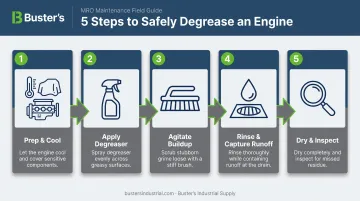
Skipping steps 1 and 4 causes most of the avoidable damage shops see: melted plastic covers from spraying a hot engine, or a fouled wash bay that fails an environmental inspection.
Safety and Compliance Best Practices
Industrial degreasing is a regulated activity. Skipping the paperwork creates liability that outlasts any grease stain.
Match PPE to the chemical. OSHA's hazard assessment standard requires employers to evaluate the workplace and select PPE based on the actual chemical, exposure duration, and conditions involved. There's no one-size-fits-all glove or respirator. As a baseline:
- Chemical-resistant gloves for hands-on contact (Buster's stocks GripProtect nitrile gloves rated for chemical resistance)
- Eye or face protection whenever splash contact is possible
- Respiratory protection and adequate ventilation for solvent-based or caustic products, especially indoors
Keep paperwork current. Every hazardous chemical on-site needs an accessible Safety Data Sheet, and workers need training on what they're actually handling. Store degreasers labeled and separated from incompatible chemicals per OSHA's Hazard Communication rules.
Disposal isn't optional. Used degreaser and rinse water almost always count as regulated wastewater. Depending on your facility, that means:
- Filtering or capturing runoff in a bermed wash pad or closed-loop system
- Getting written approval from your local wastewater authority before any sewer discharge
- Confirming NPDES stormwater permit coverage if your shop washes vehicles or equipment outdoors
Local rules vary enough that "biodegradable" or "water-based" on a label doesn't guarantee sewer-safe disposal. Check before you pour.
Frequently Asked Questions
What is the difference between an engine cleaner and a degreaser?
Engine cleaners are typically milder, all-purpose formulas for general surface cleaning. Degreasers are formulated specifically to break down heavy oil and grease with stronger solvents or higher pH.
Can you degrease an engine while it's running?
No. The engine should always be cool and switched off first. Spraying a hot or running engine risks burns, vapor inhalation, and, with solvent-based products, ignition.
How often should industrial equipment engines be degreased?
There's no universal schedule. It depends on duty cycle, environment, and OEM guidance. Many shops clean engines once or twice a year; heavy-use fleets often need more frequent attention.
Are engine degreasers safe for plastic, rubber, and electrical components?
It depends on the formula. Citrus and water-based products are generally gentler on plastics and rubber. Solvent or caustic types can damage some materials, so check the SDS and cover sensitive components.
What's the best type of degreaser for heavy oil and grease buildup?
Solvent-based or caustic heavy-duty degreasers, like Red Razer or Super Purple ULTRA, typically cut through tough buildup fastest. Both require good ventilation, gloves, and eye protection.
How should used degreaser and rinse water be disposed of?
Capture and filter runoff per local environmental regulations, and never let it enter storm drains. Check with your local wastewater authority before routing anything to a sanitary sewer.