Introduction
It's 6:45 AM and a conveyor bearing just seized on the packaging line. The maintenance tech pulls the parts drawer and finds two loose bolts and an empty box where the replacement bearing should be. Now the plant manager is on the phone with three suppliers, and none of them can ship same-day.
That's the cost of unplanned MRO buying, and it happens far too often at facilities that treat supply purchasing as an afterthought.
MRO stands for maintenance, repair, and operations: the parts, tools, and consumables that keep a facility running without ever becoming part of what the business sells.
Many companies either overpay for rush orders or run out of critical items entirely, because their buying process only kicks in after something breaks.
This guide covers what counts as MRO supplies, how to buy them with a clear strategy, what separates a strong supplier from a weak one, and the mistakes that quietly drain budgets every year.
Key Takeaways
- Planned MRO buying beats reactive ordering after a breakdown
- Total cost of ownership—shipping, lead time, downtime—matters more than sticker price
- Reorder points and safety stock stop costly last-minute emergency orders
- A responsive one-stop supplier cuts vendor count and order-chase time
What Are MRO Supplies? Understanding MRO Buying
MRO buying is the process of sourcing everything a facility needs to stay operational: items that support production and maintenance without ever becoming part of a finished product. Raw stock that ends up in a finished part isn't MRO. The drill bit that machines it, the lubricant that keeps that tool running, the gloves the operator wears, and the replacement motor bearing all are.
That distinction matters. It separates operational spend from production spend, and it's why MRO purchasing often gets managed by a different team, budget, or supplier than raw materials do.
Common Categories of MRO Supplies
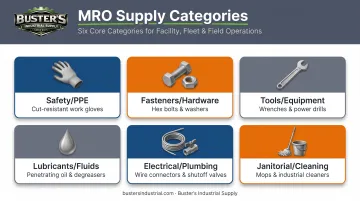
Most facilities buy MRO items across a handful of recurring categories:
- Safety and PPE: gloves, respirators, hard hats, eye protection
- Fasteners and hardware: bolts, anchors, clamps, brackets
- Tools and equipment: hand tools, cutting blades, drill bits, welding gear
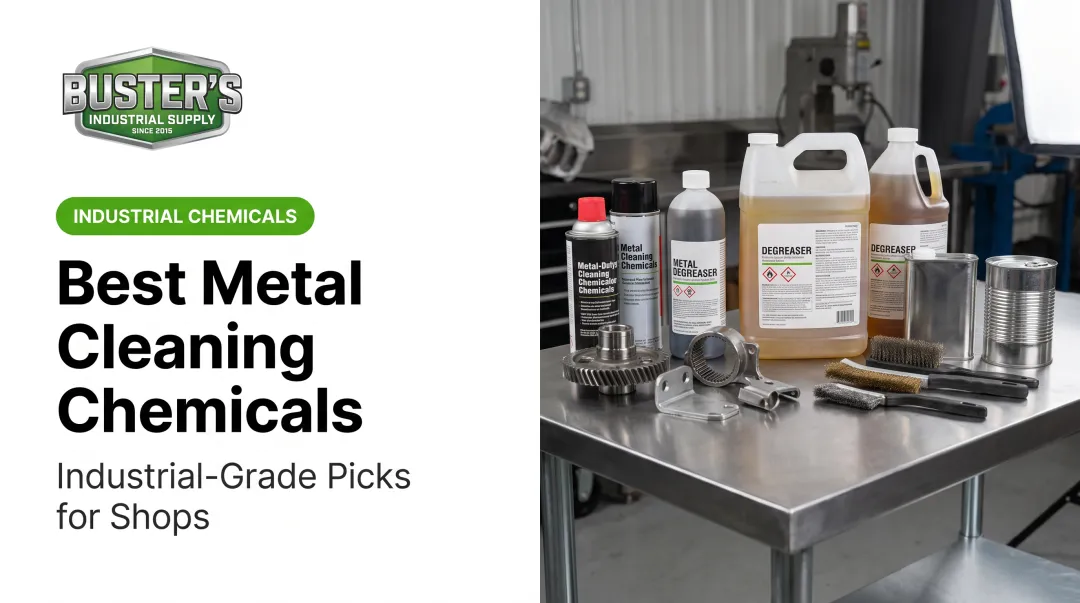
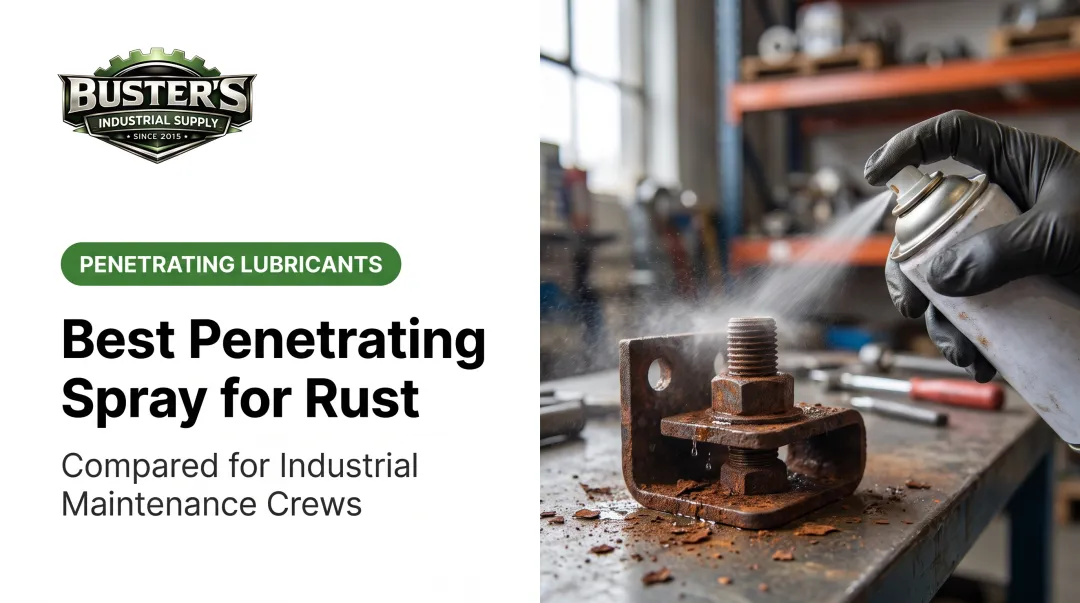
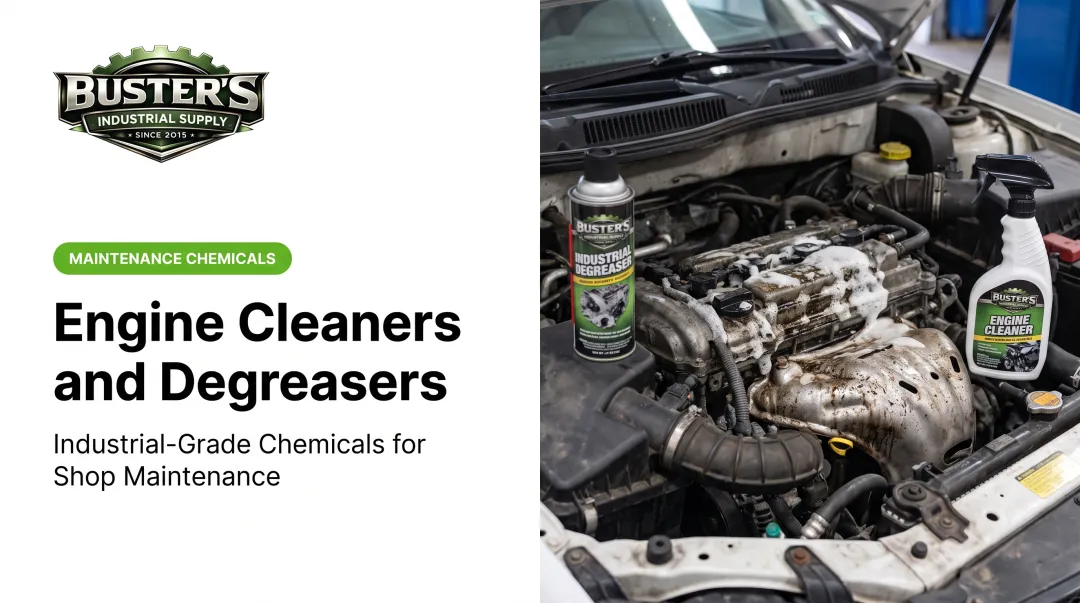
- Lubricants and fluids: penetrating oils, greases, degreasers, anti-seize
- Electrical and plumbing components: bulbs, valves, wiring, fittings
- Janitorial and cleaning supplies: mop heads, cleaning chemicals, paper products
A single mid-sized operation can juggle hundreds of SKUs across just these categories, before accounting for site-specific tools or specialty parts. That volume is exactly why organized buying, rather than one-off ordering, pays off.
Why MRO Buying Decisions Matter More Than They Seem
MRO is frequently treated as low-priority indirect spend: the stuff purchased "whenever there's time." That mindset gets expensive fast.
NIST's 2020 manufacturing survey estimated $18.1 billion in preventable unplanned-downtime losses across U.S. manufacturers in a single year, much of it tied to maintenance gaps a stocked supply room could have prevented.
The supplier side of the equation is just as messy. Modern Distribution Management pegs the industrial and facility-maintenance MRO market at roughly $303 billion and describes it as deeply fragmented despite years of consolidation. In practice, that means most buyers juggle multiple vendors for categories a single, well-stocked partner could cover instead.
How to Buy MRO Supplies: A Step-by-Step Guide
Buying MRO supplies strategically means shifting from break-fix purchasing, ordering only after something fails, to a planned process that anticipates needs before they become emergencies. Here's what that looks like in practice.
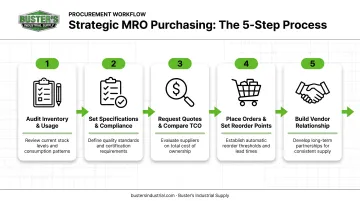
Step 1: Audit Current Inventory and Usage Patterns
Pull historical consumption data for your top items. Separate fast-moving supplies like gloves, lubricants, and cutting blades from slow-moving ones like specialty fasteners or backup motors. This tells you where to focus reorder planning and where occasional spot-buying is fine.
Step 2: Set Specifications, Quality, and Compliance Requirements
Document required specs before requesting quotes, not after. For PPE, that means following OSHA's hazard-assessment requirements: assessing workplace hazards, selecting properly fitted gear, and certifying the assessment in writing. For hardware, specify material grades. Clear specs make vendor quotes genuinely comparable instead of apples-to-oranges guesswork.
Step 3: Request Quotes and Evaluate Total Cost of Ownership
Unit price is only one line item. CIPS's total cost of ownership framework warns that a lower price paired with a high minimum order quantity can create inventory, obsolescence, and excess-stock costs that erase the savings. Compare quotes on:
- Shipping cost and delivery timeline
- Minimum order quantities
- Bulk discount tiers
- Lead time reliability
Step 4: Place Orders and Establish Reorder Points
Set min/max stock levels for recurring items and build safety stock for anything critical to daily operations. This is where vendor-managed inventory programs earn their keep.
Buster's Industrial Supply, for example, offers VMI for qualifying accounts. The program monitors stock, automatically replenishes supplies before they run out, and provides monthly usage reports that make future reorder decisions easier.
Step 5: Build an Ongoing Vendor Relationship
A dedicated point of contact who already knows your recurring needs saves time on every order after the first one. At Buster's, that's often Team Lead Jeff, who works directly with both new shops and long-established accounts to keep urgent requests moving instead of getting stuck in a call queue.
What to Look for in an MRO Supplier
Not every supplier deserves a long-term relationship. Here's what separates a reliable MRO partner from a vendor you'll be replacing within a year:
- Product breadth: a true one-stop shop covering PPE, fasteners, lubricants, and specialty tools cuts down on the number of vendors you manage
- Transparent pricing: no surprise fees buried in shipping, minimum orders, or restocking charges
- Fast, reliable delivery: including rush or emergency fulfillment when a breakdown can't wait for standard ground shipping
- Dedicated contact: someone who knows your account history, not a rotating call center
- Track record: long-term customer relationships and hands-on industry expertise signal a supplier that's still going to answer the phone in three years
Buster's Industrial Supply checks most of these boxes. Most orders ship within one to two business days, rush orders can be quoted by phone, and items in stock at its Fort Worth location are often available for same-day pickup across the DFW metroplex.
Several reviewers cite ten-plus years working with the team, pointing to that consistency as the real differentiator, not just price.
Common Mistakes to Avoid When Buying MRO Supplies
Even well-intentioned buyers fall into the same few traps:
- Chasing the lowest unit price without factoring in shipping delays, minimum order requirements, or the cost of downtime while you wait.
- Treating MRO purchasing as an afterthought, ordering only once stock runs out, which forces rushed, overpriced emergency purchases.
- Relying on a single low-cost online vendor with no accountability or support when something urgent comes up on short notice.
Picture a shop that orders gaskets from whichever site shows the lowest price that week: different vendors, different lead times, nobody who actually knows the account. When a gasket fails on a Friday afternoon, there's no relationship to call on—just a support ticket queue.
A part that's a few dollars cheaper but arrives five days late isn't actually cheaper once you count the downtime.
Why Businesses Choose Buster's Industrial Supply for MRO Buying
Buster's Industrial Supply operates as a one-stop industrial supply partner for businesses across Texas, Wisconsin, Ohio, California, Colorado, Louisiana, New Mexico, and Nevada. The catalog covers diamond cutting blades, drill bits, lubricants, janitorial supplies, welding equipment, and related MRO essentials.
The real difference is the people. Owner Buster has built more than a decade of hands-on relationships with shops and contractors. Team Lead Jeff shows up by name in customer reviews for restocking supply rooms and handling urgent requests without a runaround. That's accountability a call center can't match.
Buster's also supports businesses at every stage:
- Startups: No minimum order on online purchases, plus quotes for orders of any size
- Growth-stage shops: Tiered volume pricing, POs, net-30 accounts, and VMI with free on-site stocking for qualifying accounts
- Government and institutional buyers: GSA MAS contract purchasing with required procurement documentation
Whether you're stocking a first shop or managing supply across multiple locations, the goal stays the same: fair pricing, a supplier who picks up the phone, and one less vendor to manage.
Frequently Asked Questions
What is MRO buying?
MRO buying is purchasing the maintenance, repair, and operations products that keep facilities and equipment running—consumables, tools, and support gear. Unlike raw materials, these items never become part of a finished product.
What are examples of MRO supplies?
Common examples include PPE (gloves, respirators), fasteners, lubricants and degreasers, and hand tools. Shops also buy electrical and plumbing parts plus janitorial items like mop heads and cleaning chemicals.
What's the difference between MRO and OEM supplies?
OEM parts are made by the original manufacturer and get built into a finished product. MRO supplies support day-to-day operations and maintenance without being built into the finished product.
How often should businesses reorder MRO supplies?
Reorder frequency depends on usage patterns, not guesswork. Set reorder points and safety stock levels based on historical consumption so orders trigger before you run out.
Is it better to buy MRO supplies from one supplier or many?
Consolidating with one reliable, one-stop supplier reduces administrative overhead and improves service consistency. Keep a backup source only for niche specialty items your primary vendor doesn't carry.
How can businesses reduce MRO supply costs?
Real savings come from total cost of ownership—smart reorder points, fewer stockouts, and a stable vendor relationship—not the lowest sticker price on every PO.