Introduction
Aluminum wheels oxidize no matter how well you maintain them. That's chemistry at work, not poor upkeep. But for detail shops, dealerships, and fleets, that dull, chalky haze isn't just cosmetic. It cuts resale value and leaves inventory sitting longer on the lot.
Many shops struggle with the same problem: oxidation left untreated can progress into pitting and real corrosion, and by then you're looking at a much bigger job. Generic retail wheel cleaners work fine for one car in a driveway, but they're not built for a shop running through dozens of wheels a week.
This guide covers what actually causes oxidation and how to choose a remover that won't damage your wheels. You'll also get the step-by-step removal process and practical ways to keep oxidation from coming back.
Key Takeaways
- Oxidation is a natural aluminum-oxygen reaction, not rust, but neglect turns it into pitting and corrosion.
- Always run a quick spot-test before choosing a product; clear-coated and bare aluminum need different treatments.
- Dwell times run from 15 seconds to a few minutes; always follow the label, not a rule of thumb.
- Bulk industrial degreasers cut cost-per-wheel and downtime versus restocking small retail bottles.
What Causes Aluminum Wheel Oxidation?
The Chemistry Behind the Haze
Aluminum doesn't rust the way steel does. Instead, it forms a thin, protective layer of aluminum oxide, typically just 2 to 3 nanometers thick, according to AZoM's material properties reference. This layer is passivating, meaning it regenerates almost instantly if scratched or disturbed. That's normal and, in small amounts, protective.
The problem starts when moisture and oxygen keep reaching the metal repeatedly, building up a rougher, dull oxide layer instead of a clean thin one.
What Speeds It Up
A few conditions push ordinary oxidation into something that actually damages the finish:
- Brake dust — corrosive and abrasive, and it can pit the wheel face if left to sit
- Road salt and moisture — especially in coastal or winter-maintenance regions
- No protective coating — worn-off wax or sealant leaves bare aluminum exposed
- Hot-wheel cleaning — cleaners flash-dry, leave film, and trap grime and moisture against the metal
Clear-Coated vs. Bare Aluminum
Not every wheel oxidizes the same way. Clear-coated wheels develop a hazy film on top of the coating, while bare or polished aluminum oxidizes at the metal surface itself. Treating them the same way is the fastest route to a stripped clear coat or a wasted product. That's why a quick test (covered next) matters before you apply any product.
Choosing the Right Aluminum Wheel Oxidation Remover
Acidic, Alkaline, and pH-Balanced Formulas
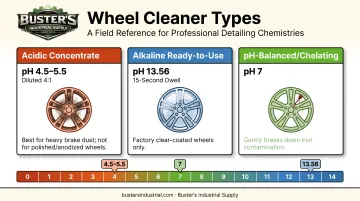
Wheel cleaners generally fall into three camps, and picking the wrong one on the wrong finish causes real damage:
| Cleaner type | Example | pH / Dilution | Best for |
|---|---|---|---|
| Acidic concentrate | Meguiar's D140 | pH 4.5–5.5, diluted 4:1 | Heavy brake dust; not for polished or anodized wheels |
| Alkaline ready-to-use | Meguiar's Hot Rims | pH 13.56, 15-sec dwell | Factory clear-coated wheels only |
| pH-balanced/chelating | CARPRO IronX | pH 7 | Breaks down iron contamination gently |
Alcoa's own service guidance flatly prohibits hydrofluoric acid, harsh acidic or alkaline products, and abrasive tools on untreated wheels. A near-neutral detergent is the safer default when you're unsure of the finish.
The Microfiber Spot-Test
Before applying anything, wipe a small section with a clean microfiber towel. Black residue transferring onto the towel means you're looking at bare, oxidized aluminum, not a clear coat. That result tells you which product category is safe to use and saves you from stripping a coating you didn't know was there.
Why Shops Need Industrial-Volume Oxidation Removers
A single retail bottle doesn't cut it when you're running wheels through a bay all day. Buster's Industrial Supply stocks Alumax Plus, a dilutable aluminum brightener and oxidation remover built for exactly this kind of volume — available in 5-gallon and 55-gallon sizes starting around $48.54. That concentration stretches a lot further per wheel than a 20-ounce spray bottle ever will.
If you're not sure how much strength or volume your shop actually needs, Jeff on the team can help match product to your real servicing volume rather than guessing and over-ordering.
PPE and Safety
Follow the manufacturer's SDS for any oxidation remover or degreaser you're using — most call for chemical-resistant gloves and eye protection at minimum. Buster's carries nitrile options like ADENNA Shadow 6-mil and Gloveworks Black Nitrile gloves, sold by the box or case, which meet that glove requirement for high-volume use.
Step-by-Step Guide to Removing Oxidation from Aluminum Wheels
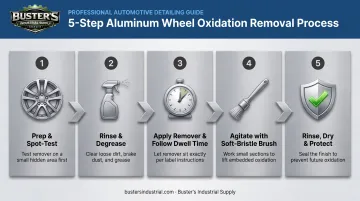
Prep the Wheel
Park on a flat, shaded surface. Never work in direct sun on a hot wheel. Chock the wheels if you're working on a lift or ramp, and run your spot-test now, before any product touches the surface.
Rinse and Degrease First
Loose dirt and brake dust need to come off before the oxidation remover goes on. A quick pass with a general degreaser clears the surface so the remover can actually reach the oxidation layer instead of fighting through grime.
Apply the Remover
- Spray evenly across the wheel face, working in sections if you're doing multiple wheels
- Follow the label's dwell time (often 15 seconds to a couple of minutes). Skip the "let it sit for 10 minutes" habit and check the bottle
- Agitate with a soft-bristle brush on heavier buildup — never a wire or stiff-bristle brush on the wheel face
Heavier Oxidation or Pitting
For buildup a standard remover won't shift, step up to an industrial-grade metal polish made for heavy oxidation. Buster's Mega Metal Polish is built for chrome, aluminum, brass, and copper. Work it in with a cloth, then buff to a shine.
You'll see recommendations online for progressive-grit wet sanding or clay bar treatments on oxidized wheels. Treat these as advanced, situational techniques rather than default steps. There's no universal grit sequence that fits every finish, and clay bars are designed to lift bonded surface contaminants off paint — not to remove structural oxidation from metal.
Rinse, Dry, and Protect
Rinse thoroughly, then dry with a microfiber towel rather than air-drying — this prevents water spotting, which is a common callback complaint. Finish with a metal polish or protective wax/sealant to lock in the shine and extend the time between full treatments.
Preventing Future Oxidation
How Often to Clean
Alcoa recommends cleaning untreated aluminum wheels weekly to keep appearance and finish intact. Treat that as a baseline for shop-serviced vehicles. Bump frequency whenever salt or brake dust is visibly building up, regardless of season.
Protective Coating Comparison
| Option | Typical Cost | Claimed Duration | Note |
|---|---|---|---|
| Wheel wax | ~$59/50ml | 3–6 months | Works on any rim material |
| Wheel sealant | ~$20/8oz | Long-lasting (no fixed figure) | Barrier against road film and brake dust |
| Ceramic coating | From ~$35 | Up to 2 years | Not for polished metal |
| Powder coat | $98–$130/rim | Multi-year (shop-dependent) | Varies by size, prep, and labor |
| Anodizing | Varies by shop | Permanent finish | Integrated layer; won't chip or peel |
Stock a Maintenance Product for Repeat Customers
Keep a metal polish or aluminum brightener on the shelf for regulars so every visit does not start as a heavy-oxidation job. A quick maintenance pass is a fraction of full restoration labor.
Shop-level habits that slow re-oxidation:
- Rinse brake dust and salt off wheels before they bake on
- Reapply wax or sealant on the schedule your coating supports
- Stock polish and brightener for fast repeat-customer turnarounds
- Inspect fleets on a set interval instead of waiting for visible chalking
Buster's Industrial Supply carries metal polish and aluminum brightener used in this kind of routine bay work, so shops can refill without interrupting the maintenance cadence.
DIY Retail Cleaners vs. Professional-Grade Solutions for Shops & Fleets
Retail cleaners and professional concentrates aren't built the same way. A ready-to-use bottle like Hot Rims runs a 15-second dwell at pH 13.56, while a professional concentrate like Meguiar's D140 dilutes 4:1 at a gentler pH 4.5–5.5. Different tools for different jobs, and neither is automatically "stronger" across the board.
Where the real difference shows up for shops is volume economics:
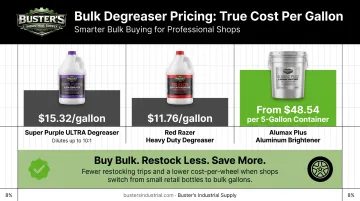
- Super Purple ULTRA Degreaser: dilutes up to 10:1, starting around $15.32 for a 1-gallon size, with 5- and 55-gallon options
- Red Razer Heavy Duty Degreaser: 5 gallons at $58.80, roughly $11.76 per gallon
- Alumax Plus: dilutable aluminum brightener, 5- and 55-gallon sizes from $48.54
Restocking a case of small retail bottles every week adds up fast, both in cost and in the time someone spends running to a store instead of servicing wheels.
For shops in Buster's service areas across Texas, Wisconsin, Ohio, California, Colorado, Louisiana, New Mexico, and Nevada, most cleaning chemical orders ship within 1–2 business days.
Qualifying accounts spending at least $500 a month can set up vendor-managed inventory so supplies get replenished before they run out—no scrambling mid-detailing season.
Common Mistakes to Avoid When Removing Oxidation
A few missteps can etch, streak, or strip a finish faster than oxidation ever did. Avoid these:
- Skip bleach entirely—sodium hypochlorite can damage aluminum on contact
- Avoid harsh alkaline or acidic cleaners not labeled for your wheel finish
- Never let cleaner sit past its dwell time or dry on the surface
- Don't air-dry; a quick microfiber wipe prevents water spots
- Always spot-test first so an aggressive product doesn't strip clear coat
Frequently Asked Questions
Does vinegar remove oxidation from aluminum wheels?
Diluted vinegar is a mild acid some people try on very light oxidation, but there's no established, tested method behind the popular "boil it" technique. It's slower and less consistent than a dedicated oxidation remover.
Does WD-40 clean aluminum wheels?
It can loosen light residue as a spot treatment, but it's not a manufacturer-recommended wheel cleaner. For real oxidation or heavier brake dust, a proper degreaser works faster and more reliably.
What should you not use to clean aluminum wheels?
Avoid bleach, harsh acidic or alkaline cleaners not labeled for your wheel's finish, abrasive scrubbers, steel wool, and stiff or wire brushes. All of these risk discoloration or scratching.
Is it necessary to polish aluminum wheels after removing oxidation?
Yes. Polishing restores shine and leaves a thin protective layer that slows how quickly oxidation returns, making your next cleaning cycle easier.
How often should aluminum wheels be treated to prevent oxidation buildup?
It depends on the environment. Weekly washing is a solid baseline for untreated wheels, more often in salt or coastal conditions. Pair that with periodic wax, sealant, or coating reapplication.
Can heavily oxidized or pitted aluminum wheels be fully restored?
Most oxidation responds well to cleaning and polishing. Severe pitting is different: it's physical metal loss, so professional refinishing or replacement may be the only real fix.